Tech Stack
Description
The User CRUD Management App is a robust solution designed to streamline administrative data handling. It bridges a modern TypeScript-based frontend with a high-performance Node.js backend.
By utilizing a configuration-driven approach for form rendering, the application allows developers to add new data fields (like 'Address' or 'Role') by simply updating a JSON schema, eliminating the need for complex UI refactoring.
The project emphasizes clean state management and optimized API communication, ensuring that frontend interactions remain snappy and synchronized with the backend database at all times.
The architecture is fully decoupled, with the Express API serving as a standalone service, making it ready for integration with mobile apps or third-party services in the future.
- Architected a Decoupled Full-Stack System using Next.js for the client and Express for the RESTful API.
- Developed a Configuration-Driven Form Engine that dynamically generates UI components based on a field schema.
- Implemented Strict Form Validation using regex-based checks for localized phone numbers and email formats.
- Integrated Ant Design (antd) for a cohesive and professional-grade UI/UX with responsive layouts.
- Engineered reusable API utility layers with Axios for centralized error handling and request interceptors.
- Established clear Loading and Error States to improve user perception of performance during network latency.
- Deployed the ecosystem across Vercel and Render with optimized build pipelines for continuous delivery.
Page Info
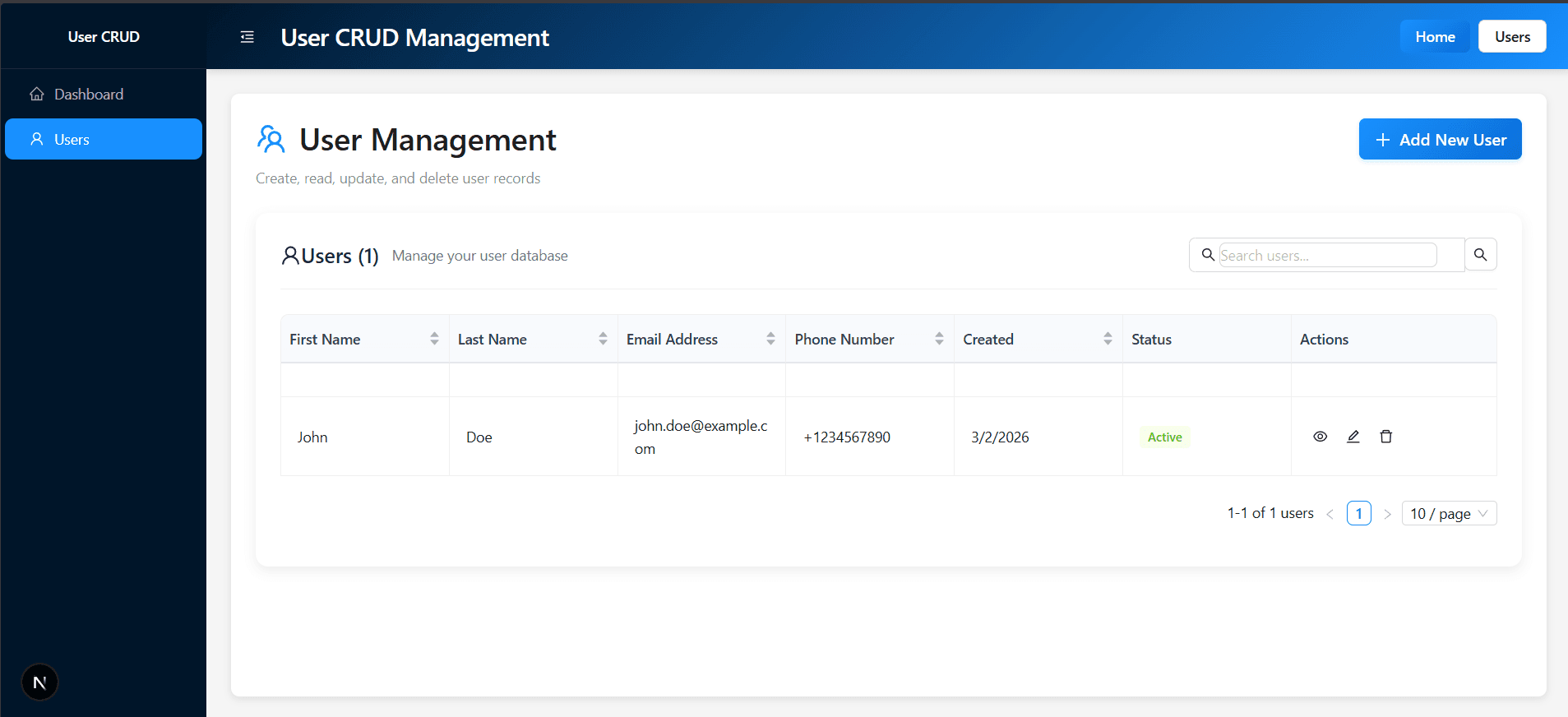
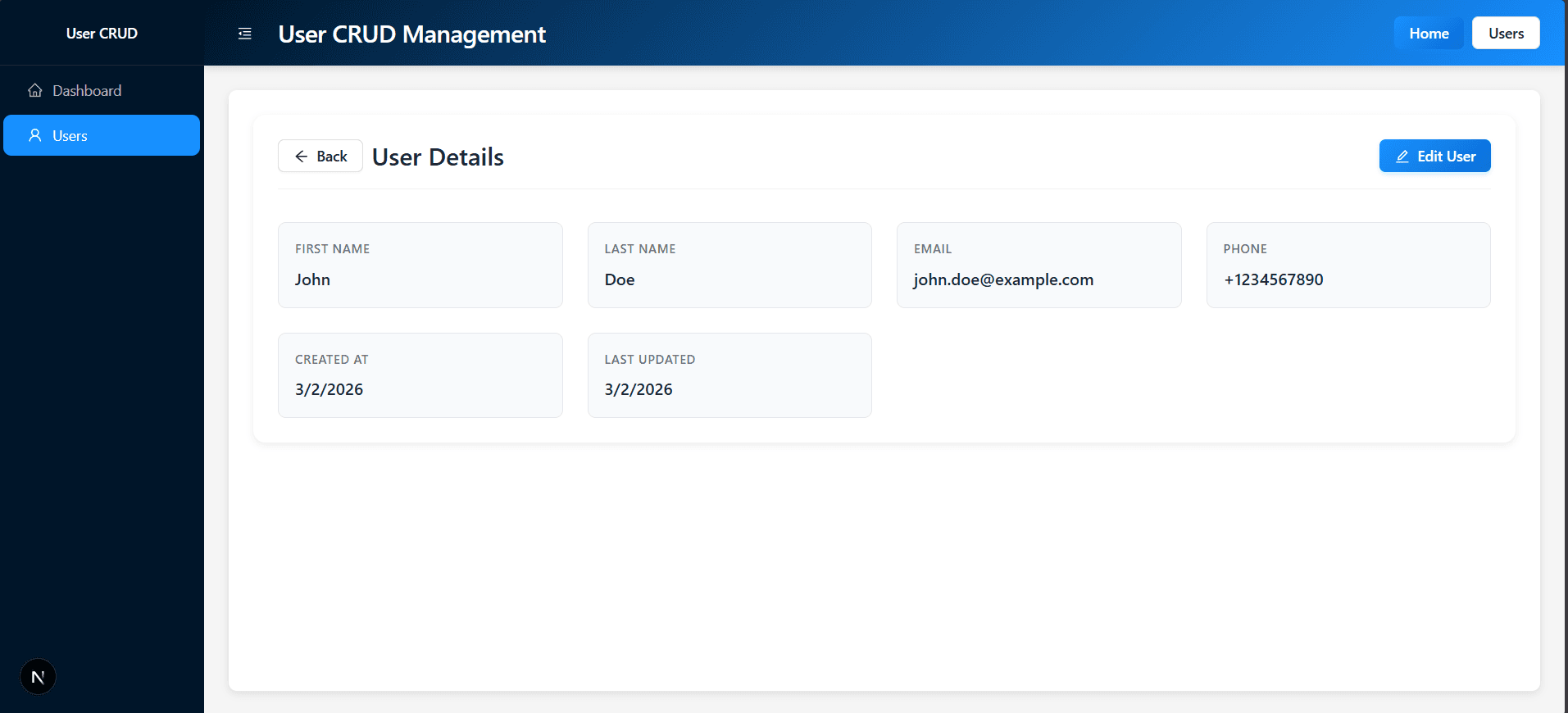
User Directory & Management
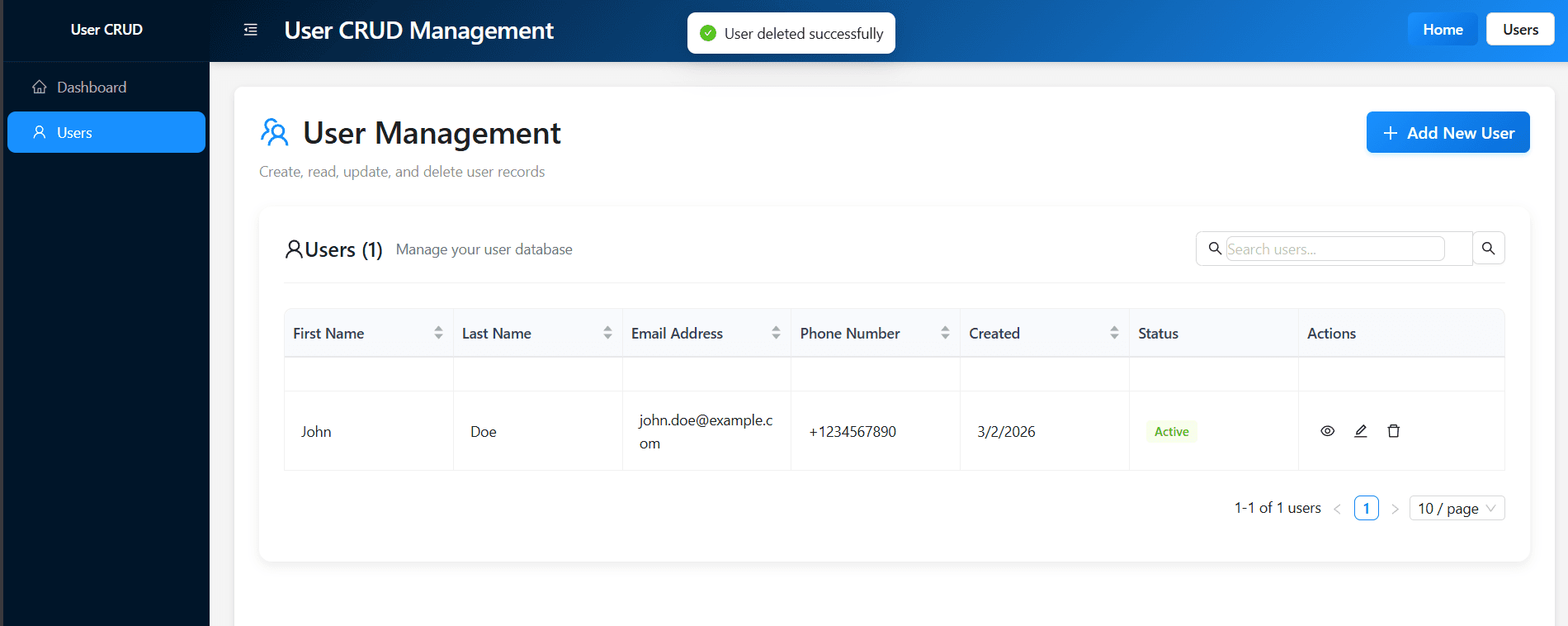
A centralized dashboard featuring an Ant Design table component with integrated actions for viewing, editing, and deleting users with real-time feedback.
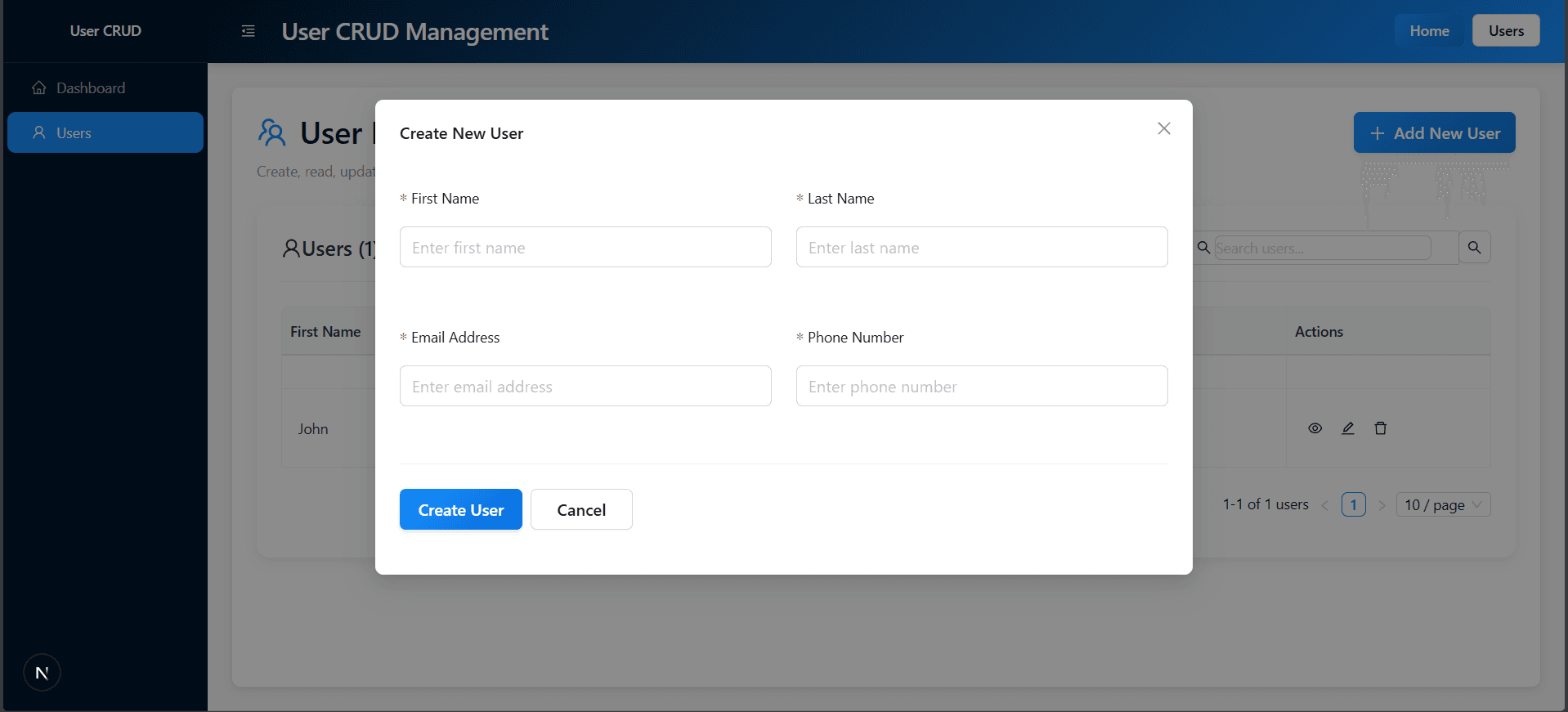
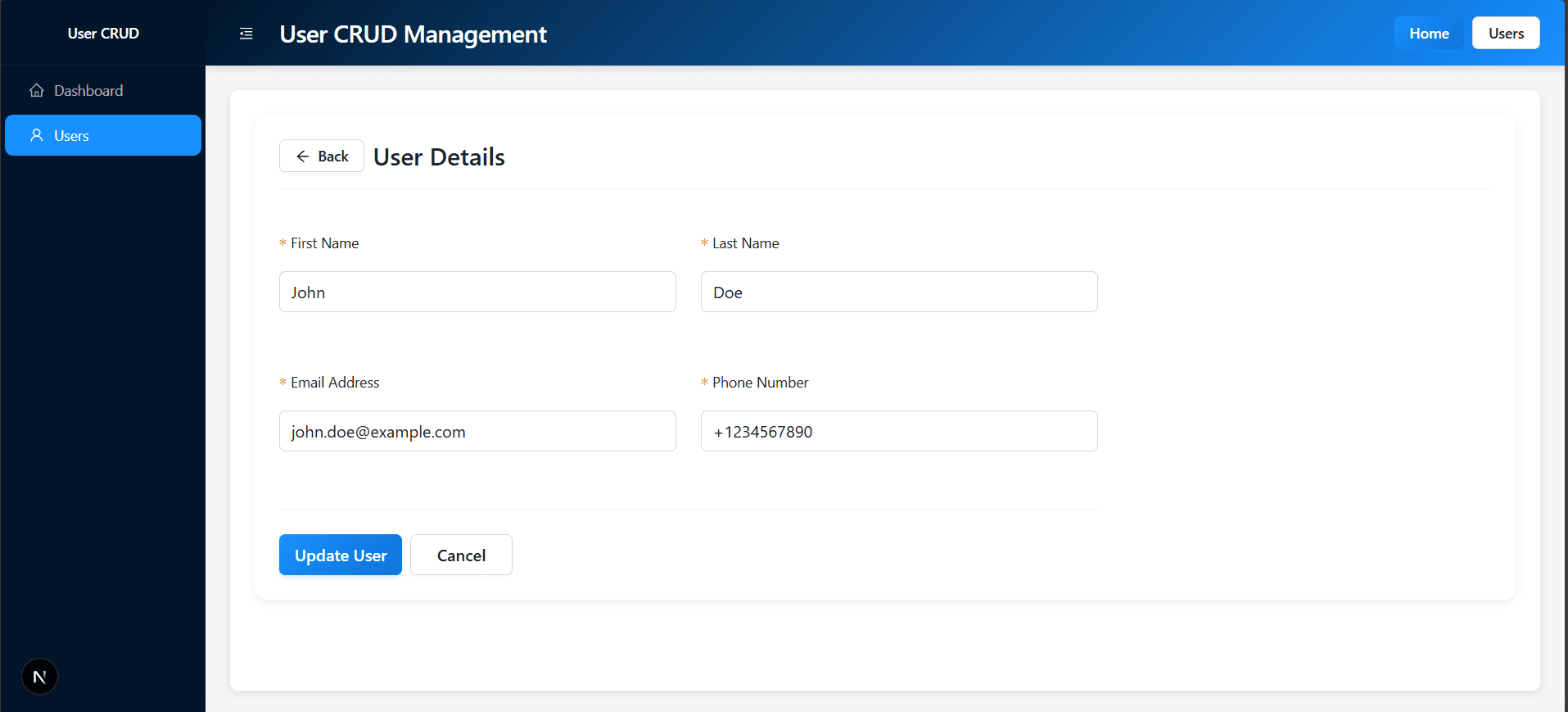
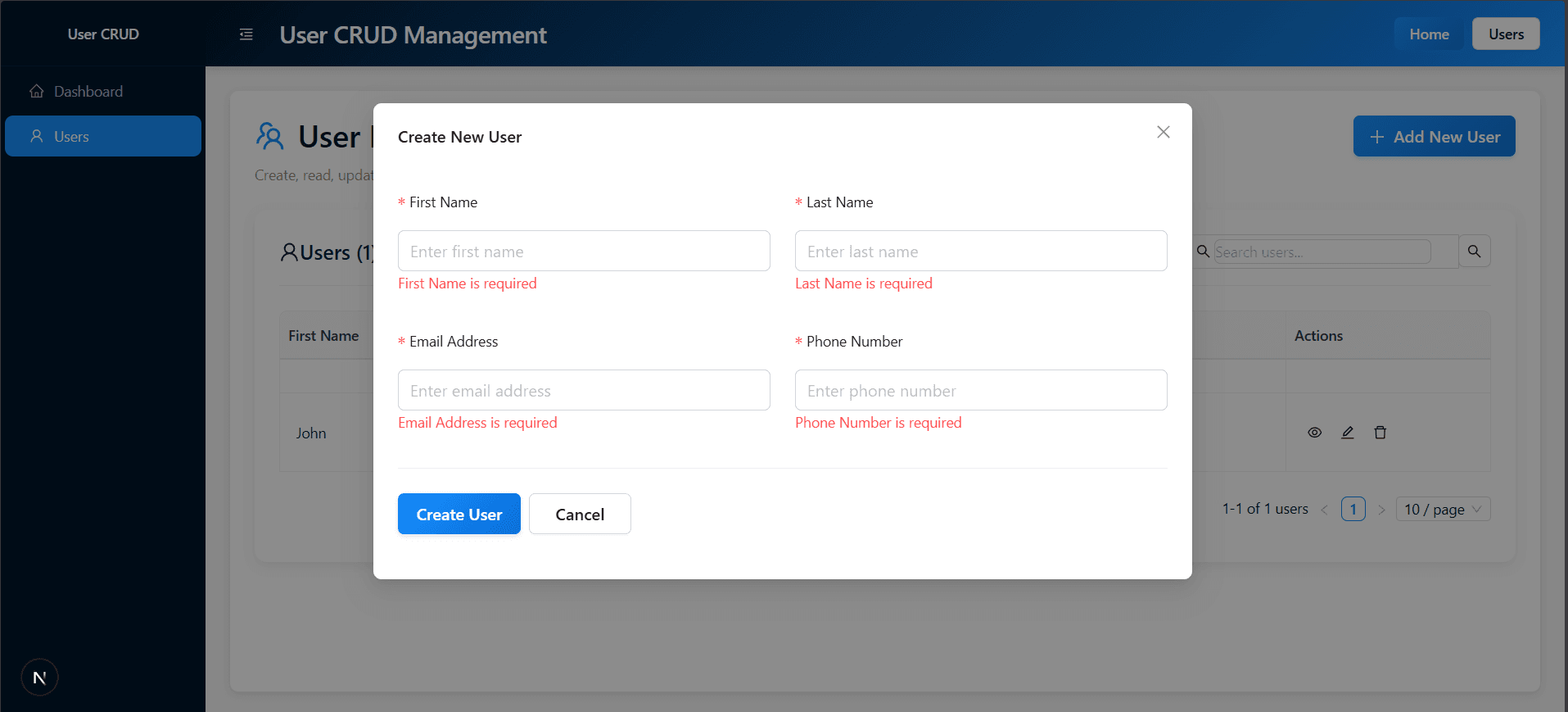
Dynamic Form Interface
A configuration-driven form that handles user creation and updates. Features built-in validation for emails and phone numbers with instant error messaging.
API Integration & States
Visual demonstration of loading skeletons, global error handling, and success notifications during asynchronous REST API calls.